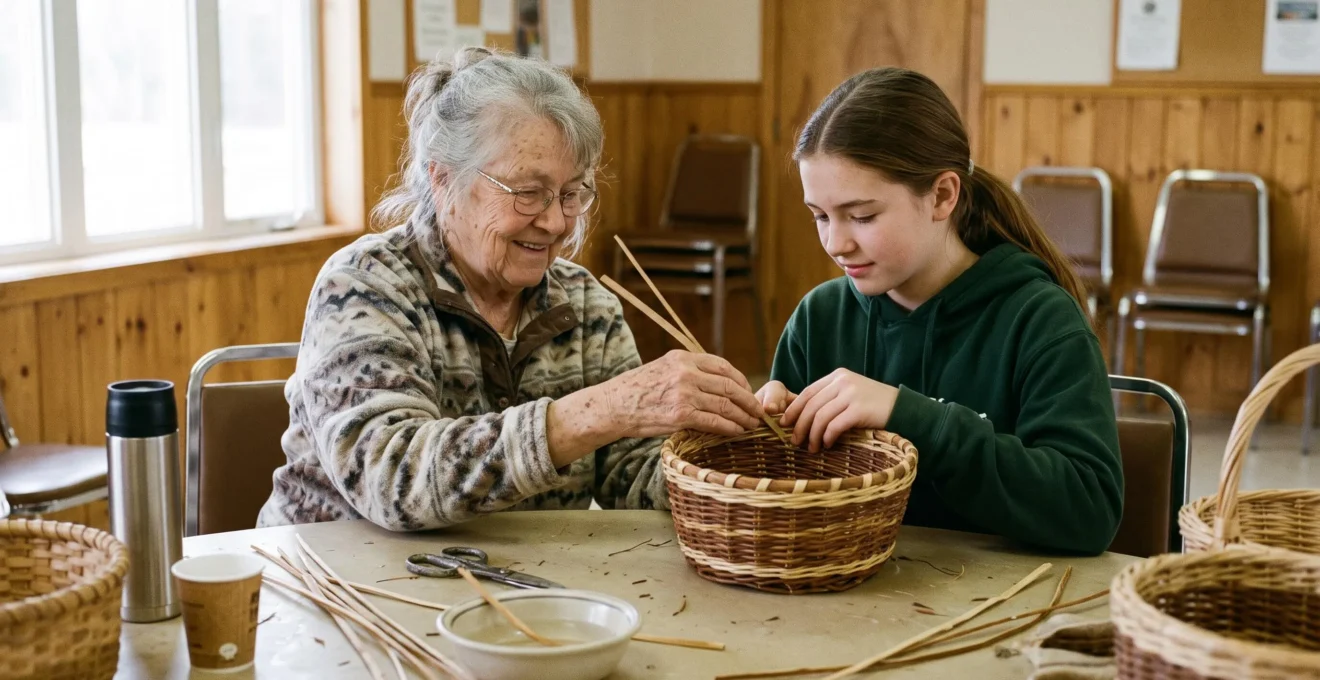
When a Canadian neighbourhood changes, its cultural heritage changes with it. Families move, languages become less common in everyday conversation, familiar gathering places close, and younger generations develop different ways of expressing their identities. Yet these changes do not necessarily mean that local traditions must disappear.
Communities can preserve cultural heritage by recording personal histories, protecting meaningful objects and documents, creating opportunities for knowledge-sharing, and involving residents in decisions about how their stories are represented. The essential task is to preserve not only what people did, but also why those practices mattered and who has the authority to explain them.
Across Canada, this work involves many kinds of heritage, including Indigenous cultural knowledge, longstanding regional traditions, immigrant community practices, and traditions emerging through interactions among residents. These histories are not interchangeable, and different communities may have distinct expectations about access, ownership and cultural continuity.
Effective preservation therefore depends on a balance: protecting knowledge that could otherwise disappear while allowing living traditions to develop on terms established by the people who sustain them.
Key principles for preserving cultural heritage in changing communities
- Preserve meaning alongside practices by documenting languages, personal histories, cultural relationships and the circumstances in which traditions developed.
- Combine community-controlled archives, appropriate digital access and recurring intergenerational activities rather than relying on a single preservation method.
- Include originating communities in decisions about interpretation, public art and cultural adaptation so heritage remains meaningful and responsibly represented.
- Why Are Some Canadian Cultural Traditions Disappearing Between Generations?
- How to Record Oral Histories Without Losing Important Cultural Context
- Community Archives or Digital Collections: Which Better Preserve Local History?
- Common Interpretation Mistakes That Can Distort Local Heritage Stories
- How Intergenerational Workshops Can Keep Community Traditions Relevant
- Multiculturalism or Interculturalism: Which Approach Shapes Local Experiences?
- How Can Residents Participate in Planning a Neighbourhood Mural?
- How Do Public Art Installations Change the Experience of Canadian Cities?
Why Are Some Canadian Cultural Traditions Disappearing Between Generations?
Some Canadian cultural traditions disappear because the relationships and everyday settings that once sustained them weaken. Changes in language use, migration, family routines and community gathering places can interrupt the transmission of knowledge. Other traditions evolve naturally as younger generations reinterpret them. Understanding the difference helps communities decide whether to document, revive or adapt a practice.
A tradition is sustained through more than repetition. A family recipe, seasonal celebration or craft technique often carries knowledge about relationships, beliefs, local resources and shared experiences. When those connections are no longer explained, the visible practice may survive while its cultural significance becomes harder to understand.
Consider a hypothetical community where traditional weaving continues primarily through demonstrations for visitors. Participants may learn recognizable patterns without understanding who historically made particular objects, how materials were gathered, or what the designs meant to their makers. The activity remains visible, but important knowledge may no longer be transmitted.
Not every change represents cultural loss. A younger generation might adapt a traditional celebration to accommodate new schedules, different languages or contemporary artistic forms while maintaining its central meaning. In other circumstances, a tradition may be at risk because the people who hold its knowledge no longer have opportunities to teach it.
Population change can intensify both processes. Departure from a community may weaken established social networks, while newcomers bring practices that contribute to an expanding understanding of local heritage. Cultural continuity and cultural renewal can therefore occur simultaneously.
Residents and cultural organizations can look for practical warning signs:
- Young people rarely use a heritage language in daily conversation.
- Knowledgeable elders have few opportunities to demonstrate or explain traditional practices.
- Community celebrations attract participants from only one generation.
- Traditional gathering places have disappeared without suitable alternatives.
- Cultural activities continue, but participants cannot explain their history or significance.
These observations should prompt conversation rather than assumptions. A tradition that is less visible publicly may still be meaningful within families or private community settings.
Once residents understand what is changing, they can decide which knowledge needs careful documentation and which practices would benefit more from opportunities for active participation.
How to Record Oral Histories Without Losing Important Cultural Context
Recording oral histories effectively requires more than collecting interviews. Communities should document the storyteller’s relationships, language, surroundings and sources of knowledge while establishing informed consent and appropriate control over recordings. Preserving this context helps future listeners distinguish personal recollection, shared cultural understanding and historical evidence without reducing complex experiences to isolated quotations.
Preparation should begin with a conversation about the purpose of the project. Interviewers can ask participants which subjects they wish to discuss, whether certain knowledge should remain private, and where a conversation would feel most natural.
For a story about traditional food preparation, recording in a familiar kitchen may help capture gestures, utensils and informal explanations that would not emerge from a formal interview. For a story about a former workplace or neighbourhood gathering place, photographs and maps can help establish context.
Interview questions should explore how knowledge moved between people. Asking « Who taught you this practice? » may reveal relationships between family members, neighbours, teachers and community organizations. Questions about when a practice was performed and who participated can be equally valuable.
Language deserves particular attention. Translating an interview entirely into English or French may obscure distinctions carried by the original language. A useful approach is to retain the original recording, prepare a translation with someone who understands its cultural context, and preserve important terms that have no straightforward equivalent.
Translations should be identified as interpretations, rather than replacements for the original account.
Consent is another essential part of the process. Interviewees should understand whether recordings will be used for community education, exhibitions, research or online publication. They should also be able to discuss access restrictions and how future requests for reuse will be handled.
For Indigenous cultural knowledge, project organizers must respect the relevant community’s governance, protocols and decisions about what may be recorded or shared. Individual participation does not necessarily authorize unrestricted public distribution of collectively held or culturally restricted knowledge.
Finally, interviewers should distinguish memory from independent corroboration. A second storyteller or historical document may confirm a detail, introduce another perspective or reveal disagreement. The purpose is not to eliminate personal memories, but to describe accurately what each source establishes.
Five practical steps for a contextual oral history recording
- Define the purpose: prepare a one-page project brief identifying the tradition, intended audience and proposed uses.
- Agree on participation: complete a documented consent and access agreement before recording.
- Capture cultural context: create an interview guide covering language, setting, relationships and the origins of the storyteller’s knowledge.
- Preserve original meaning: retain the original recording alongside a contextual transcript or translation, with culturally specific terms identified.
- Review the record: prepare a fact-check and participant-review log identifying confirmations, corrections, disagreements and publication restrictions.
Once recordings exist, communities must make a further decision: where the material should live, who should care for it, and how future generations can access it appropriately.
Community Archives or Digital Collections: Which Better Preserve Local History?
Neither community archives nor digital collections are universally better for preserving local history. Physical archives retain original materials and support local stewardship, while digital collections can improve access across distances and reduce dependence on one physical location. The appropriate choice depends on the condition of the materials, cultural access restrictions, community resources and long-term maintenance capacity.
Physical archives are particularly valuable when original objects carry information beyond their written content. Handwritten annotations, paper texture, photographic formats and physical arrangements may all contribute to historical interpretation.
Locally managed collections also provide opportunities for face-to-face consultation and community oversight. However, they require suitable storage, security, conservation practices and consistent stewardship.
Digital collections address different challenges. Searchable records can help residents who have moved elsewhere reconnect with local history. Digital copies may also reduce handling of fragile originals and provide additional means of recovery when physical collections are damaged.
Yet digitization is not the same as permanent preservation. Library and Archives Canada identifies software and hardware obsolescence, deteriorating storage media, technical restrictions and inadequate metadata as threats to continued digital access. These risks are addressed in Library and Archives Canada’s digital preservation policy, effective October 30, 2024.
A community comparing the two approaches can use the following decision framework.
| Decision criterion | Community archive | Digital collection |
|---|---|---|
| Original objects | Protects physical materials and their original characteristics. | Provides representations but cannot replace the originals. |
| Geographic access | Often requires an in-person visit or assisted retrieval. | Can support access from multiple locations when permissions allow. |
| Preservation risks | Requires protection against physical deterioration, damage and loss. | Requires protection against file corruption, obsolete systems and loss of access. |
| Cultural control | Can support locally governed access and supervised consultation. | Requires deliberate permissions, technical controls and platform governance. |
| Ongoing resources | Needs appropriate space, staff or volunteers, and conservation planning. | Needs storage, technical maintenance, metadata and migration planning. |
For many communities, a hybrid arrangement is worth considering. Fragile originals can remain in appropriate local storage while approved digital copies and indexes support research and education.
This approach succeeds only when responsibilities are explicit. Someone must oversee physical storage, maintain digital backups, review access permissions and plan for changing technology.
The Canadian Heritage Information Network‘s digital preservation resources provide planning materials covering formats, documentation, storage and continued access. The directory also includes Canadian museum experiences, including digital preservation planning at the 8th Hussars Museum in Sussex, New Brunswick.
These institutional resources offer useful starting points, although each community must evaluate its own capacity and the sensitivity of its collection.
Whichever system a community adopts, access alone does not guarantee accurate understanding. Historical materials still need careful interpretation, especially when people remember events differently.
Common Interpretation Mistakes That Can Distort Local Heritage Stories
Local heritage stories become distorted when interpreters romanticize the past, suppress competing memories, remove cultural practices from their original context or publish accounts without community review. These errors can make exhibitions and archives appear coherent while misrepresenting lived experiences. Responsible interpretation identifies uncertainty, acknowledges disagreement and gives knowledge holders meaningful opportunities to shape how their stories are presented.
One common problem is presenting history as an uninterrupted story of local harmony or progress. Difficult subjects may be softened to make an exhibition more appealing, even when they are central to residents’ experiences.
A neighbourhood history that celebrates commercial development, for example, may be incomplete if it ignores how displacement or changing access to gathering places affected particular communities. A more trustworthy interpretation can recognize achievements without concealing conflict.
Another mistake is treating one account as the definitive version of a tradition. Two people may remember the same event differently because of their ages, responsibilities, relationships or positions within the community.
Disagreement can itself be historical evidence. Rather than forcing testimonies into a single account, interpreters can explain whose perspectives are represented and where recollections differ.
Cultural practices can also be distorted when their distinctive meanings are replaced by generalized descriptions. Displaying an object as simply « traditional Canadian art, » without identifying its makers or cultural origins where disclosure is appropriate, may remove information necessary to understand it.
This is particularly important when dealing with Indigenous cultural expressions. Public availability does not automatically mean that cultural knowledge is unrestricted or that outside organizations have authority to reinterpret it.
A practical safeguard is a community interpretation review before publication. The process can include:
- Identifying who provided each story or object and what permissions apply.
- Separating documented facts from interpretations and personal recollections.
- Inviting relevant knowledge holders to review descriptions and translations.
- Recording differing perspectives without falsely presenting universal agreement.
- Correcting errors before an exhibition, archive record or educational resource is released.
Review should not be treated as a symbolic consultation after decisions have already been made. Participants need sufficient time, accessible materials and a clear explanation of how their feedback will influence the result.
It is also important to acknowledge the limits of any project. Some accounts remain incomplete, and some knowledge may be inappropriate for public disclosure.
Accurate documentation creates a foundation for preservation, but cultural continuity also depends on opportunities for people to use and reinterpret that knowledge together.
How Intergenerational Workshops Can Keep Community Traditions Relevant
Intergenerational workshops help preserve traditions by turning cultural knowledge into a shared activity rather than a one-way presentation. Older participants can demonstrate practices and explain their meanings, while younger participants contribute questions, creative adaptations and documentation skills. Workshops are most effective when sessions recur, relationships continue and communities identify which elements of a tradition should remain consistent.
Consider a hypothetical neighbourhood workshop centred on a longstanding food tradition. An elder explains how a dish was prepared, when it was served and what its ingredients represented. Younger participants prepare the recipe, ask about substitutions, and document the process through photographs or audio recordings.
The outcome is more substantial than a cooking demonstration. Participants learn techniques alongside the circumstances that made them meaningful, while the community produces material that can support future learning.
Active participation is essential. Younger people who simply watch may remember the event without developing the confidence to continue the practice. Asking them to demonstrate a learned technique, interview a relative or explain the tradition to another participant gives them responsibility for transmission.
Workshops can also benefit from complementary skills. An older craft practitioner might demonstrate specialized techniques, while younger volunteers help catalogue materials or produce a short instructional recording, subject to the knowledge holder’s approval.
This collaboration should remain reciprocal. Older participants are not merely sources to be documented, and younger participants should not be valued only for their technical abilities.
One-off cultural events have limitations. A single afternoon may introduce an activity, but it rarely establishes the relationships and repeated practice needed to sustain it.
A more durable program could include a regular schedule, participants who return across sessions, shared responsibility for organization, and a tangible project that develops over time. That project might be a community recipe collection, an approved recording series or an ongoing apprenticeship.
Adaptation also deserves explicit discussion. A tradition may remain meaningful even when younger participants change its presentation or incorporate contemporary materials. However, not every component is necessarily open to modification.
Workshop organizers can invite cultural knowledge holders and participants to distinguish core meanings, essential protocols and practices that can evolve. This prevents change from being treated automatically as either a betrayal or an improvement.
Success is better assessed through continuity than attendance alone. Useful questions include whether participants return, whether they can explain what they learned, and whether relationships continue beyond the organized sessions.
These local efforts take place within broader Canadian approaches to cultural coexistence, which influence how different traditions are recognized and presented in public life.
Multiculturalism or Interculturalism: Which Approach Shapes Local Experiences?
Multiculturalism and interculturalism offer different ways of understanding cultural diversity in Canadian communities. Federal multiculturalism emphasizes recognition of diverse cultural identities and equitable participation in society, while Quebec’s intercultural approach places particular emphasis on interaction and a shared public culture. Neither framework automatically preserves traditions: meaningful continuity still depends on community relationships, resources and intergenerational knowledge-sharing.
Canada’s federal multiculturalism framework is anchored in the Canadian Multiculturalism Act, enacted in 1988. The legislation recognizes Canada’s multicultural heritage and supports equitable participation by individuals and communities of different origins.
The Government of Canada‘s overview of the Canadian Multiculturalism Act describes the federal legislative framework and the role of federal institutions.
1988
The year Canada’s federal Multiculturalism Act was enacted. This is a legislative milestone, not evidence that cultural traditions are automatically preserved.
Canadian Heritage, Government of Canada.
Quebec’s intercultural approach is commonly discussed in terms of interaction between cultural communities, social participation and the importance of French as a common public language. It should not be confused with a claim that all cultural differences are expected to disappear.
The distinction may become visible in how local activities are organized. As a hypothetical illustration, a multicultural festival might invite different communities to present separate traditions through food, performance and storytelling.
An event designed around intercultural exchange might instead emphasize a collaborative project in which participants from different backgrounds create something together.
These examples illustrate different organizing principles, not universal descriptions of Canadian or Quebec municipalities. Communities may combine approaches, and local experiences depend on far more than a single policy label.
Neither approach replaces cultural transmission. Public recognition can create space for traditions, but it cannot substitute for speakers teaching a language, elders passing on skills, or residents maintaining meaningful gathering places.
The relationship between cultural recognition and Indigenous heritage also requires care. Indigenous peoples’ distinct rights, histories and relationships with their lands cannot be adequately understood solely through frameworks designed to discuss immigrant or ethnocultural diversity.
Residents examining their own municipality can ask whether community activities allow traditions to remain distinct, encourage collaboration, or create room for both. More importantly, they can ask whether the communities concerned have chosen those arrangements themselves.
One setting in which these choices become especially visible is public art, where decisions about cultural representation can transform a shared neighbourhood space.
How Can Residents Participate in Planning a Neighbourhood Mural?
Residents can influence a neighbourhood mural by contributing to early discussions about its purpose, supplying documented local stories, participating in available consultation processes and reviewing proposed designs. Opportunities vary by municipality and project sponsor. The most meaningful involvement happens before the theme and artist brief are finalized, when community input can still influence the work’s direction.
A mural may be initiated by a municipal department, neighbourhood association, business improvement association, cultural organization or another local sponsor. Each arrangement can offer different opportunities for public participation.
Residents can begin by identifying the project organizer and asking when themes, artist selection criteria and community engagement plans will be established.
Where available, participation might involve a public meeting, a workshop about neighbourhood identity, submissions of historical material, or a resident role in an advisory or selection process. These opportunities should be verified with the project organizer rather than assumed to exist everywhere in Canada.
It helps to understand the project sequence. An illustrative municipal process may begin with identifying a wall and defining the project’s objectives, followed by artist selection, design development, applicable permissions and eventual production.
The sequence is not standardized across every municipality, but it demonstrates why consultation after a design has been approved may have limited influence.
Residents can strengthen their contributions by bringing materials gathered through earlier heritage work. Oral histories, archival photographs, maps and documented accounts can provide a more reliable starting point than broad assumptions about what a neighbourhood represents.
Representation requires more than visual recognition. If a mural depicts a cultural community, its members should have meaningful opportunities to shape the interpretation and review the proposed imagery. Co-approval with the originating community can be established as a project safeguard where appropriate, but it should not be presented as a universal municipal requirement.
Long-term responsibilities also matter. The Canadian Conservation Institute guidance on planning a new mural addresses agreements concerning ownership, maintenance, expected lifespan, possible relocation, copyright, moral rights and conservation funding.
Clarifying these issues early protects both the artwork and the relationships surrounding it. Residents should understand who will care for the mural, what happens if the wall changes ownership, and how future alterations will be considered.
Community participation should not end automatically when the painting is complete. The finished work may generate new memories, concerns or interpretations that deserve acknowledgement.
A mural developed through informed collaboration can become a shared reference point for a changing community, but its long-term cultural value depends on what residents continue to do with it.
Key takeaways for turning heritage preservation into public expression
- Base public art on documented local histories and acknowledge whose knowledge, memories and cultural perspectives are represented.
- Establish meaningful community participation before major design decisions are fixed, with appropriate authority for originating cultural communities.
- Plan for interpretation, maintenance and future change so an artwork remains part of community life rather than becoming an isolated historical display.
How Do Public Art Installations Change the Experience of Canadian Cities?
Public art installations can change Canadian urban spaces by making local histories visible, creating recognizable gathering points and inviting residents to reconsider their surroundings. Murals, sculptures and participatory works may strengthen neighbourhood identity when their meanings are grounded in community experience. Their cultural value, however, depends on representation, accessibility, ongoing care and openness to changing interpretations.
Unlike heritage materials stored in an archive, public art becomes part of everyday movement through a city. Residents encounter it while walking to school, shopping or using public transit. A familiar image or installation can give an ordinary location an additional layer of meaning.
This visibility creates opportunities for conversation. A mural might encourage neighbours to discuss a former gathering place, while a public installation could draw attention to stories that have received little recognition in official commemorations.
Public art can also take different approaches to cultural memory.
A commemorative monument generally presents a relatively fixed interpretation of a person, event or historical experience. A participatory installation may instead invite visitors to contribute stories, respond to an evolving theme or take part in recurring community activities.
Neither form is inherently superior. A stable memorial may offer continuity and recognition, while an evolving work may provide more opportunities for reinterpretation. The appropriate approach depends on the purpose of the project and the community’s preferences.
Visibility does not guarantee agreement. Residents may disagree about whose stories deserve prominence, how historical events should be portrayed, or whether an installation represents the neighbourhood fairly.
These disagreements need not automatically be treated as project failures. When handled through respectful dialogue, they can reveal experiences that a single interpretation has overlooked.
Physical change creates further challenges. Outdoor works experience weathering, and buildings or public spaces may be redeveloped. Some installations will require conservation, relocation or eventual removal.
Communities should therefore distinguish between preserving an artwork’s physical form and preserving the cultural knowledge associated with it. Photographic documentation, artist interviews, community accounts and agreed maintenance records can help retain a work’s history even when its physical circumstances change.
Public art contributes most directly to living heritage when residents remain involved. A mural grounded in oral histories can become the starting point for school activities, neighbourhood conversations or new storytelling projects rather than simply functioning as decoration.
A practical next step is to select one local tradition or story, speak with the people who sustain it, establish how it may be documented and shared, and explore whether a community workshop, archive project or collaborative public artwork could support its future. Preserving cultural heritage does not require communities to remain unchanged; it requires giving people the knowledge, relationships and decision-making power to carry their histories forward.
Can a small community preserve its heritage without a museum or professional archivist?
Yes. A small community can begin with clearly consented oral histories, descriptions of locally held photographs, recurring knowledge-sharing activities and a basic inventory of significant materials. The priority is to establish responsible stewardship, record cultural context and avoid making access promises that cannot be maintained. Professional conservation or archival assistance may become necessary for fragile or complex collections.
Should every cultural heritage recording be made publicly available?
No. Some recordings contain personal information, sensitive family histories or culturally restricted knowledge. Public access should follow informed consent, applicable privacy obligations and the governance or cultural protocols of the communities concerned. An archive can preserve material without providing unrestricted online access.
How can newcomers contribute to an established neighbourhood’s cultural heritage?
Newcomers can participate in local history projects, attend community activities, share their own experiences and collaborate with longstanding residents. Their contributions can become part of the neighbourhood’s evolving heritage without replacing earlier histories. Projects benefit from allowing different communities to explain their own traditions and decide how collaboration should occur.
What should happen when community members disagree about a historical story?
Organizers should document the differing accounts, identify what available evidence supports, and explain where uncertainty remains. Consultation can clarify factual mistakes and cultural context, but agreement should not be manufactured. Preserving multiple perspectives may offer a more accurate historical record than selecting one account as the official version.
How can residents tell whether a heritage preservation project is making progress?
Useful signs include continued participation across generations, properly documented materials, established access permissions, returning workshop participants and community members who can explain the significance of preserved practices. Projects should also assess whether knowledge holders remain involved in decisions and whether preservation responsibilities can be sustained over time. The number of digital files or event attendees alone does not establish cultural continuity.