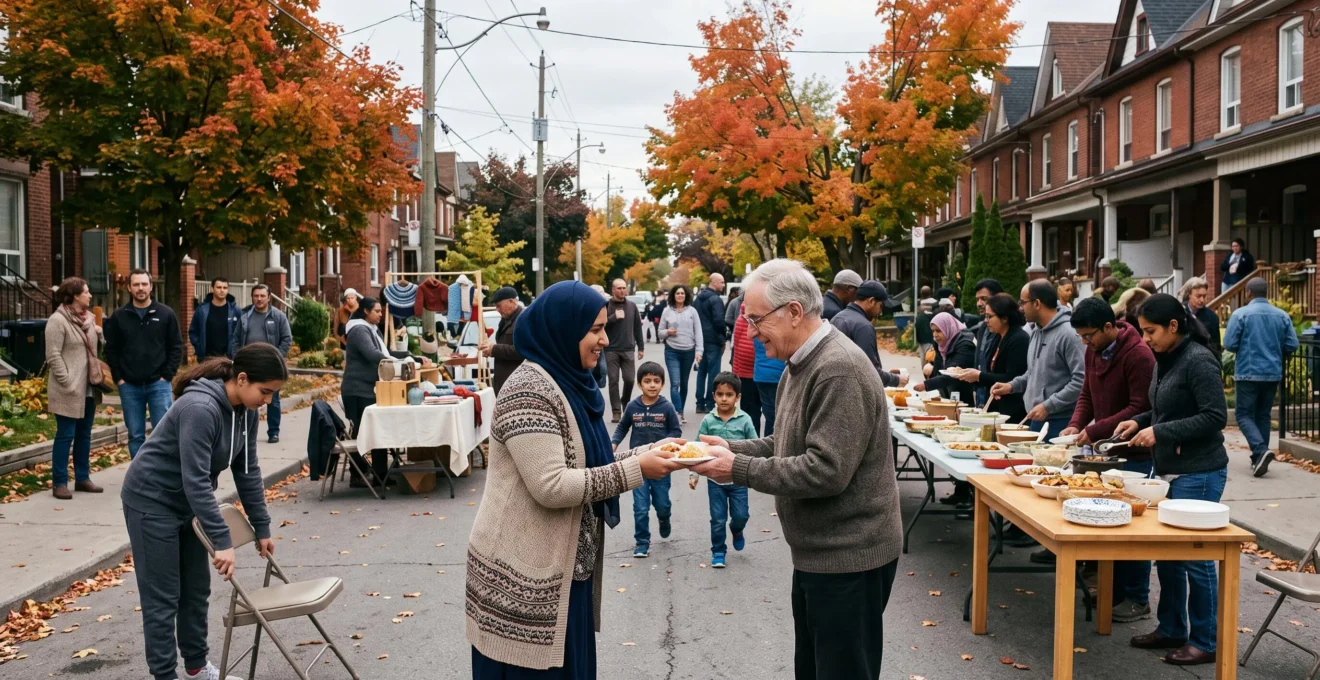
Canadian identity is increasingly understood through the communities people belong to, the languages they speak, the traditions they maintain and the ways they participate in public life. Rather than replacing a single national identity with competing alternatives, these experiences reveal how belonging can operate at several levels simultaneously.
The country’s diversity is substantial. According to the 2021 Census, Canadians reported more than 450 ethnic or cultural origins, while approximately languages spoken regularly at home 450 languages 2021 were spoken regularly at home, including 68 Indigenous languages. These figures, presented in Statistics Canada‘s Canadian multiculturalism data snapshot, illustrate the range of backgrounds and linguistic practices present in Canadian society.
Yet demographic diversity alone does not explain how identity changes. Provincial institutions, Indigenous sovereignty, migration, intergenerational relationships and civic participation all influence what being Canadian means in everyday life. Understanding those forces helps residents and newcomers recognize both the differences between communities and the connections that sustain a shared society.
Canadian identity at a glance
- Belonging is layered: Regional, Indigenous, cultural and national identities can coexist without requiring people to choose only one.
- Participation reshapes identity: Newcomers and younger generations influence communities through relationships, civic initiatives and shared public spaces.
- Continuity requires adaptation: Cultural heritage survives most effectively when communities create opportunities to transmit and reinterpret traditions.
- Why Does Canadian Identity Feel Different Across Provinces and Territories?
- How Can Newcomers Build Community Connections Without Losing Their Cultural Roots?
- Multiculturalism or Interculturalism: Which Approach Shapes Local Experiences?
- The Cultural Assumptions That Can Exclude Canadians from National Conversations
- How Youth-Led Community Initiatives Are Changing Local Civic Engagement
- Why Do Some Public Sculptures Spark Debate in Canadian Communities?
- Why Are Some Canadian Cultural Traditions Disappearing Between Generations?
- How Can Canadian Communities Preserve Cultural Heritage as Their Populations Change?
Why Does Canadian Identity Feel Different Across Provinces and Territories?
Canadian identity feels different across provinces and territories because regional histories, languages, Indigenous nations, public institutions and everyday community practices shape how residents experience belonging. These differences extend beyond local customs: education, healthcare, cultural programming and language policies influence daily life. A shared Canadian citizenship therefore accommodates distinct regional experiences rather than producing one uniform national culture.
In Quebec, French-language public life and a distinct political history strongly influence collective identity. Atlantic communities may place particular importance on longstanding local relationships, while Prairie narratives often emphasize agricultural heritage, community cooperation and self-reliance. These are recognizable regional tendencies, not descriptions of every resident.
Northern communities operate within different geographical and institutional circumstances. In Nunavut, Inuit cultural and linguistic priorities are central to public life, alongside territorial institutions and the practical realities of remote communities. Across Canada, First Nations, Inuit and Métis identities also reflect distinct peoples, histories, rights and political relationships that cannot be reduced to provincial identities.
Institutional differences make regional identity tangible. Provincial responsibility for education means curricula and school experiences vary. Language policies influence government communication and public services, while municipalities, Indigenous governments and community organizations provide different forms of cultural programming.
Consider the difference between attending a community event in Montreal, participating in a cultural program in Iqaluit and joining a volunteer association in rural Alberta. Each setting can express Canadian belonging while reflecting different languages, histories, institutions and relationships to place.
To understand which layers of identity matter locally, residents can ask three questions:
- Which government or organization delivers cultural and community services?
- Which languages and historical narratives are visible in public institutions?
- Who participates in local decisions, and whose perspectives receive less attention?
The answers reveal whether provincial policy, municipal programming, Indigenous governance or informal community networks have the greatest influence on everyday experiences.
Strong regional attachment does not necessarily contradict national belonging. People can identify closely with a province, territory, Indigenous nation or municipality while also valuing institutions and relationships that connect them with other Canadians.
These overlapping identities become particularly important when newcomers begin building relationships within communities whose social expectations may initially be unfamiliar.
How Can Newcomers Build Community Connections Without Losing Their Cultural Roots?
Newcomers can build meaningful connections in Canada by developing relationships across cultural backgrounds while maintaining the languages, traditions and family networks that matter to them. Integration does not require cultural replacement. Participating in schools, workplaces, neighbourhood organizations and shared-interest activities can expand social networks while allowing newcomers to preserve important aspects of their existing identities.
Integration is often more useful to understand as layering rather than replacement. A person may retain family celebrations, religious practices or a heritage language while gradually adopting new civic habits, professional relationships and community traditions.
These combinations differ between individuals and generations. Some practices remain central to daily life; others change as families respond to new circumstances. There is no single timeline or predetermined cultural outcome.
Connections based on shared interests offer one practical route into local society. Sports clubs, neighbourhood gardening groups, professional associations, school parent councils and public libraries create opportunities for people to interact around common activities rather than cultural background alone.
Immigration, Refugees and Citizenship Canada identifies these opportunities in IRCC’s community connection resources for newcomers. Its guidance also describes settlement services, volunteering and Canada Connects, an initiative that matches newcomers with Canadian citizens or longtime community members.
A practical approach changes according to settlement stage:
- During initial settlement: Identify applicable settlement services, language-learning opportunities and community information resources. Eligibility varies, and Quebec has distinct settlement arrangements.
- While establishing routines: Join one recurring activity connected to work, family interests, education or recreation.
- After developing local familiarity: Participate in volunteering, mentorship or neighbourhood initiatives where relationships can deepen through shared responsibilities.
Heritage communities remain important sources of emotional support, knowledge and practical assistance. However, relying exclusively on familiar networks may limit exposure to additional professional and civic opportunities. Conversely, distancing oneself entirely from cultural roots can weaken valuable family and community connections.
The objective is not to select one network over another, but to build relationships that serve different needs.
Over time, these relationships can make belonging less dependent on a fixed cultural definition and more connected to shared experiences, trust and participation.
Multiculturalism or Interculturalism: Which Approach Shapes Local Experiences?
Multiculturalism and interculturalism both address cultural diversity, but they emphasize different approaches to social integration. Canada’s federal multiculturalism framework recognizes cultural diversity and equitable participation as public values. Quebec’s intercultural approach places particular emphasis on French as a common public language and participation in a shared civic culture. Local experiences depend on how institutions translate these principles into practice.
Federal multiculturalism has an established legislative history. Canada adopted multiculturalism as an official federal policy in 1971, recognized multicultural heritage under section 27 of the Canadian Charter of Rights and Freedoms in 1982, and passed the Canadian Multiculturalism Act in 1988.
As explained in Canadian Heritage‘s explanation of the Canadian Multiculturalism Act, the federal framework promotes diversity, equality and inclusion through federal institutions.
Quebec’s policy environment has its own historical and political foundations. Its June 2026 national integration policy, Bâtir ensemble notre culture commune, emphasizes French-language public life and participation in a common Quebec culture while recognizing cultural diversity. This contemporary policy should not be treated as an unchanged description of all earlier provincial approaches.
The distinction becomes clearer when comparing their stated priorities:
| Dimension | Federal multiculturalism | Quebec intercultural approach |
|---|---|---|
| Central emphasis | Recognition of cultural diversity and equitable participation | Participation in a shared public culture centred on French |
| Language | Operates alongside Canada’s federal official-languages framework | Emphasizes French as the common language of public life |
| Cultural participation | Supports the recognition and participation of diverse communities | Emphasizes interaction and participation within a common civic framework |
| Institutional application | Federal responsibilities and programs | Quebec provincial responsibilities and programs |
These differences do not mean municipalities follow two completely separate social models. Toronto, Vancouver, Montreal and Winnipeg operate within different demographic and institutional contexts. Local programs may combine cultural recognition, language support and shared civic activities in varying ways.
Residents can evaluate their own community through everyday questions. In which languages are public services communicated? How are cultural celebrations accommodated? Are newcomers encouraged to participate in established institutions, create their own associations, or both?
Neither approach automatically guarantees inclusion. Critics of multiculturalism question whether cultural recognition can coexist with social separation. Critics of interculturalism question whether expectations surrounding a common public culture can disadvantage minority practices. The practical significance of either criticism depends on implementation and lived experience.
Even carefully designed policies can leave barriers intact when public institutions overlook the assumptions built into their normal ways of operating.
The Cultural Assumptions That Can Exclude Canadians from National Conversations
Canadian public conversations can exclude people through assumptions that appear neutral but favour particular languages, locations, professional backgrounds or cultural experiences. Treating urban anglophone perspectives as universal, equating familiarity with local customs with competence, or requiring narrowly defined Canadian experience can limit participation without explicit discriminatory language. Inclusion therefore depends partly on examining ordinary institutional habits.
One example is the expectation that professional competence must be demonstrated through Canadian work experience. When employers rely on this requirement without identifying a genuine occupational need, internationally acquired skills may receive inadequate consideration.
The problem is not that local knowledge never matters. Some positions require familiarity with Canadian regulations, professional standards or service systems. The difficulty arises when an undefined preference for local experience becomes a substitute for assessing relevant abilities.
Language can create similar barriers. English and French have important institutional roles, but proficiency in a particular communication style is not identical to intelligence, professional ability or civic understanding.
National discussions may also prioritize experiences associated with large urban centres. Rural communities, Northern residents and people whose daily lives depend on different infrastructure or institutions may find their circumstances underrepresented.
Exclusion often operates through defaults. Meeting schedules, dietary arrangements, media references, consultation formats and expectations about public speaking can favour those already familiar with prevailing norms.
A community organizer can identify these patterns by observing who attends consultations, who feels comfortable contributing and whose feedback influences decisions. An employer can examine whether recruitment criteria measure actual job requirements or assumed cultural familiarity.
Practical adjustments include providing accessible information in relevant languages, offering hybrid participation, accepting written contributions and making consultation opportunities visible beyond established professional or social networks.
These changes should reflect the communities involved rather than rely on a single standardized definition of inclusion. Indigenous participation, for example, may also require attention to rights, governance relationships and consultation responsibilities that cannot be reduced to general diversity initiatives.
Changing those conditions creates opportunities for residents who have previously been overlooked, including younger people developing new approaches to civic involvement.
How Youth-Led Community Initiatives Are Changing Local Civic Engagement
Youth-led initiatives are changing Canadian civic engagement by making participation more project-based, collaborative and connected to specific community concerns. Rather than relying exclusively on established organizations or formal membership, young people can organize around housing, environmental protection, reconciliation and cultural expression. These initiatives suggest that belonging can be demonstrated through contribution, not only inherited through birthplace or family history.
Traditional civic engagement often involves joining an association, attending scheduled meetings or progressing through established volunteer roles. Youth-led approaches can instead begin with a concrete problem and organize participation around achieving a visible result.
A neighbourhood planting project, for example, may bring students together for planning, fundraising and physical work. A youth council can provide a channel for communicating local concerns to municipal decision-makers. Indigenous youth cultural projects may focus on language learning, storytelling or relationships with elders.
These are different forms of participation, but they share an emphasis on active involvement in shaping community life.
Digital communication can help participants coordinate activities without depending entirely on traditional meeting structures. However, online engagement does not automatically produce lasting community change. Projects still require organizers, resources, accessible meeting spaces and relationships with people who can help implement decisions.
Institutional partnerships can provide that support. Municipalities may offer facilities or access to local planning processes; school boards can help connect students to projects; Indigenous governments and community organizations can support initiatives consistent with their priorities and responsibilities.
The challenge is maintaining youth leadership. When institutional partners take over decisions, an initiative may lose the flexibility and ownership that originally encouraged participation.
Short-term funding and the departure of student organizers can also interrupt otherwise promising projects. Succession planning, shared documentation and opportunities for younger participants to assume leadership can help maintain continuity.
Perhaps the most significant change is conceptual: community membership becomes something people help create. A young resident need not share the same family history as neighbours to contribute to a place’s future.
As generations participate in reshaping public spaces, they also reconsider which historical figures, events and cultural expressions those spaces should represent.
Why Do Some Public Sculptures Spark Debate in Canadian Communities?
Public sculptures can spark debate because monuments communicate which histories, individuals and values a community chooses to honour. As understanding of colonialism, residential schools and historical injustice changes, commemorative works may acquire meanings different from those intended when they were installed. Disagreements often concern representation, historical accountability and ownership of shared public space rather than artistic design alone.
A monument is more than a historical object. Its placement in a park, civic square or institutional entrance gives it a public role, often suggesting that the person or event represented deserves collective recognition.
That message can become contested when residents evaluate the commemorated history differently. A figure once celebrated for political or institutional achievements may also be associated with policies that harmed Indigenous peoples or other communities.
Conversely, some residents may regard an existing monument as evidence of historical continuity and worry that removing it would weaken public understanding of the past.
The central distinction is between remembering history and publicly honouring it. Preserving historical information does not necessarily require maintaining every monument in its original location or without explanation.
Communities have several possible responses:
- Contextual interpretation: Add accurate historical information explaining the monument’s origins, contested legacy and changing public meaning.
- Additional commemorative works: Introduce other perspectives through new sculptures, memorials or installations.
- Community consultation: Involve affected residents and relevant Indigenous nations in decisions about interpretation, relocation or replacement.
- Temporary installations: Use exhibitions or public art projects to explore different narratives before making longer-term changes.
Each approach involves trade-offs. Additional plaques may provide context but leave the original honouring function intact. Removal can address concerns about public celebration while raising questions about where the object and its history should be interpreted afterward.
Consultation also requires more than collecting opinions. Participants may have different relationships to the history involved, and Indigenous rights and perspectives cannot simply be treated as interchangeable with general public preferences.
No single solution applies to every monument. The relevant historical evidence, purpose of the public space and communities affected all matter.
The same relationship between continuity and change appears in less visible ways when families and communities decide which cultural traditions to carry into the next generation.
Why Are Some Canadian Cultural Traditions Disappearing Between Generations?
Some Canadian cultural traditions are disappearing between generations because the environments that once supported their transmission have changed. Urbanization, migration, intermarriage, language shifts and the decline of familiar gathering places can reduce opportunities for young people to learn established practices. In other cases, traditions persist but take new forms. Indigenous cultural transmission also reflects specific histories of deliberate disruption requiring distinct recognition and responses.
Traditions are often learned through repetition rather than formal teaching. Children may acquire language through conversations with relatives, learn recipes by cooking with family members or absorb community customs through seasonal gatherings.
When those everyday settings weaken, the tradition can become harder to maintain even if younger generations continue to value it.
Changing family structures and geographic mobility can contribute to this process. Relatives may live farther apart, while work schedules and urban living arrangements can reduce participation in locally organized activities.
Loss of interest and loss of transmission infrastructure are different problems. A tradition may gradually disappear because participants no longer consider it meaningful. Alternatively, people may want to continue it but lack access to elders, cultural spaces, heritage-language instruction or experienced practitioners.
The distinction matters because the responses differ. Communities cannot assume that enthusiasm alone will restore a practice when the resources required to learn it are missing.
For Indigenous peoples, some disruptions have a particularly serious historical foundation. Residential schools and the Sixties Scoop separated children from families and communities, damaging opportunities to transmit languages, knowledge and cultural practices across generations.
These experiences should not be equated with ordinary changes in lifestyle or voluntary cultural adaptation. Indigenous language and cultural revitalization can involve rebuilding transmission that was deliberately interrupted.
Language nests, elder-supported learning and community cultural programs illustrate approaches through which intergenerational knowledge can be actively restored, although their availability and circumstances differ across communities.
Not every cultural change represents disappearance. Foods once prepared routinely may become associated with special celebrations. Crafts previously connected to everyday work may become intentional expressions of heritage. Festivals can evolve as families combine traditions from different backgrounds.
Such changes may preserve recognizable elements of cultural identity while altering their social function. Whether that transformation is considered continuity or loss depends partly on the values and perspectives of the people who maintain the tradition.
Once communities identify what is changing and why, they can make more deliberate decisions about which practices need support and how future generations can participate.
Key takeaways for sustaining cultural heritage
- Preservation efforts should identify whether a tradition needs renewed interest, practical resources or restoration of interrupted transmission.
- People who carry cultural knowledge must have meaningful authority in deciding how it is shared and adapted.
- Long-term continuity depends on creating opportunities for younger generations to practise traditions, not merely observe or document them.
How Can Canadian Communities Preserve Cultural Heritage as Their Populations Change?
Canadian communities can preserve cultural heritage by helping knowledge move between generations while welcoming appropriate participation from changing populations. Archives and collections remain valuable, but living traditions also require people who teach, practise and adapt them. Sustainable preservation therefore combines cultural stewardship, intergenerational learning, accessible community spaces and opportunities for residents to contribute without erasing the origins of established practices.
The most useful starting point is to distinguish preserving an object from sustaining a practice. A traditional recipe can be documented, but its continued social meaning may depend on people cooking and sharing it together. A language can be recorded, but living transmission requires meaningful opportunities to speak and learn it.
Communities can support this process through apprenticeships, storytelling gatherings, community kitchens, cultural workshops and opportunities for younger participants to work directly with experienced practitioners.
Population change can also create opportunities for cultural exchange. A local festival might invite newer residents to share food traditions alongside established celebrations. A neighbourhood cultural project could bring together participants with different migration histories to explore their relationships with the same place.
Such collaboration works best when participation is grounded in respect rather than treating every tradition as freely available for reinterpretation. Indigenous cultural knowledge, ceremonies and expressions may carry specific community protocols and responsibilities. Decisions about access and transmission should remain with the appropriate knowledge holders and communities.
For other cultural traditions, organizers should likewise distinguish between inviting participation and assuming authority over a practice maintained by someone else.
Preservation also depends on continuity of leadership. If a community tradition relies on only a few experienced organizers or elders, its future becomes uncertain when those individuals can no longer participate.
A five-step cultural heritage continuity checklist
- Inventory living practices: Identify recurring languages, celebrations, skills and community activities. Produce a one-page inventory showing where each is currently practised.
- Identify knowledge holders: Consult people who maintain these practices, with appropriate consent and cultural protocols. Create an agreed contact and stewardship list.
- Map transmission gaps: Determine which activities younger participants already learn and which depend on a shrinking number of practitioners. Produce a simple continuity-risk assessment.
- Design one participatory activity: Work with knowledge holders to plan a workshop, gathering or apprenticeship. Document an approved activity plan with responsibilities and participation arrangements.
- Establish succession and review: Identify future organizers, necessary resources and a process for collecting participant feedback. Produce a continuity plan with a named review date.
This process is a practical planning framework, not a guarantee that every tradition will continue unchanged. Some practices may evolve substantially, while others require protection from inappropriate use or outside control.
Successful cultural stewardship should be evaluated through meaningful participation, the wishes of knowledge holders and the ability of future generations to maintain or responsibly adapt what they inherit.
A useful next step is to choose one local tradition, identify who currently carries it and start a conversation about how others can help sustain it. Canadian identity remains continuous not because communities stop changing, but because people keep finding ways to connect what they inherit with what they create together.
Can someone identify strongly with Canada and another cultural heritage?
Yes. National belonging and cultural heritage are not necessarily competing identities. A person can participate in Canadian civic life while maintaining another language, family tradition or cultural affiliation. The balance varies between individuals and may change across generations.
Does cultural diversity mean Canadians no longer share common values?
No such conclusion follows automatically from demographic diversity. Canadians may disagree about cultural practices while still participating in shared institutions and public life. Common commitments do not require identical histories or lifestyles, although disagreements about equality, rights and belonging remain important subjects of public debate.
Why does language matter so much to Canadian identity?
Language shapes communication, access to institutions, family relationships and the transmission of cultural knowledge. English and French have official roles at the federal level, while Indigenous languages and many other community languages remain significant to people’s identities. Their social and institutional circumstances differ across Canada.
How can a newcomer identify welcoming community opportunities?
Public libraries, community centres, recreational associations, volunteering groups and applicable newcomer settlement services offer useful starting points. Recurring activities connected to personal interests can help develop relationships naturally. Service eligibility and local availability should be checked, particularly because settlement arrangements differ in Quebec.
Can cultural traditions evolve without losing their authenticity?
Yes, although authenticity is understood differently across communities. Changes in setting, participation or presentation do not automatically eliminate a tradition’s meaning. The perspectives of cultural knowledge holders, appropriate community protocols and continuity of essential knowledge help determine whether an adaptation remains respectful and meaningful.