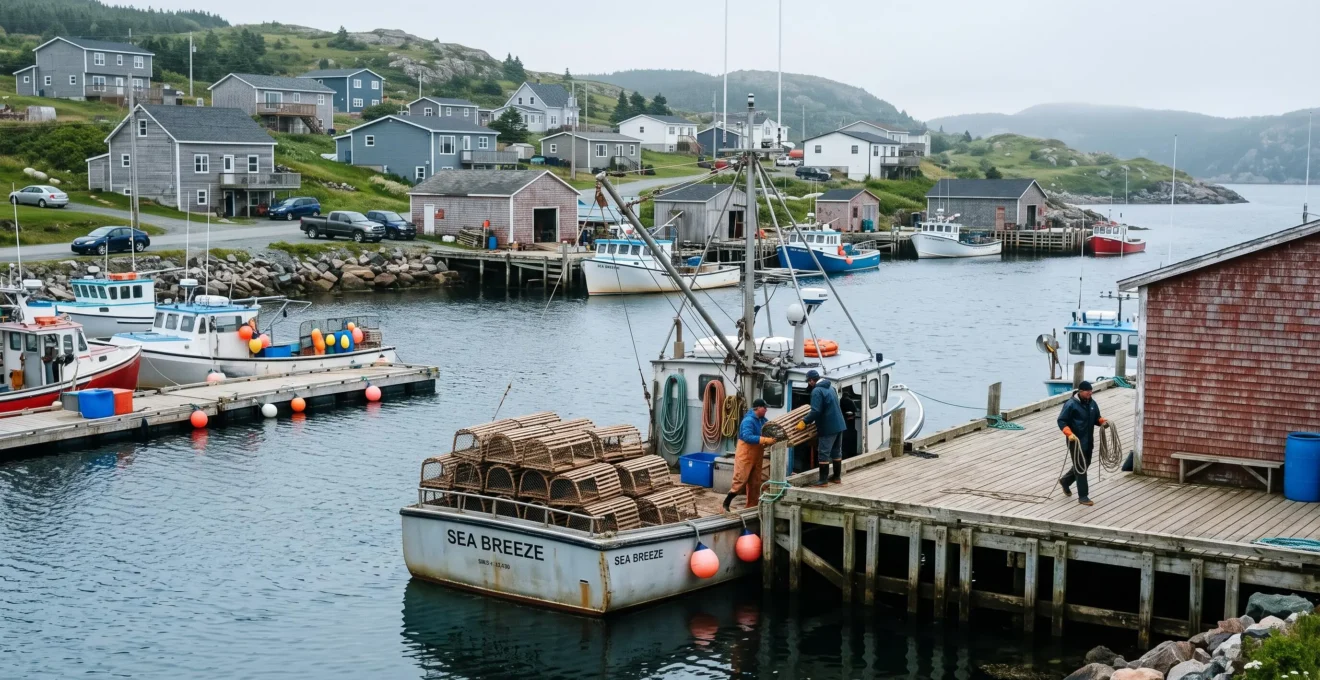
Canada’s working coastal fishing villages offer a way to experience maritime heritage through the places, people and traditions that continue to shape everyday life. Beyond attractive waterfronts and seafood restaurants, these communities reveal how commercial fishing influences local employment, regional food systems, settlement patterns and cultural identity.
On the Atlantic coast, visitors can encounter Acadian fishing traditions, lobster operations and established harbour communities such as Chéticamp in Nova Scotia. On the Pacific coast, places such as Steveston in Richmond, British Columbia, connect contemporary fishing activity with the history of salmon processing and the development of Canada’s West Coast fishing industry.
Exploring these destinations meaningfully requires a distinction between public visitor experiences and commercial working areas. Harbour observation, local museums, established seafood businesses and community-led interpretation can provide valuable cultural encounters without disrupting fishing operations. The most rewarding visits combine curiosity about maritime life with respect for local access rules, working schedules and the communities that sustain these traditions.
Discovering Canada’s Working Fishing Villages
- Explore working harbours as economic and cultural centres, not simply picturesque waterfront attractions.
- Compare Atlantic and Pacific fishing traditions through local heritage, seafood practices and regional geography.
- Plan visits around legitimate public access, fishery-specific seasons and respectful interactions with coastal communities.
- Why Do Fishing Harbours Remain Important to Atlantic Canadian Communities?
- How to Visit a Working Fishing Harbour Respectfully and Safely
- Atlantic or Pacific Fishing Villages: Which Experiences Are Different?
- Seafood Tourism Assumptions That Can Mislead First-Time Coastal Visitors
- When Should You Visit Coastal Villages to Experience Working Harbours?
- How to Record Oral Histories Without Losing Important Cultural Context
- How Poor Visitor Management Can Strain Small-Town Infrastructure
- How to Explore Lesser-Known Canadian Regions Without Complicated Travel Planning
Why Do Fishing Harbours Remain Important to Atlantic Canadian Communities?
Fishing harbours remain important to Atlantic Canadian communities because they provide the infrastructure connecting commercial fishing crews with seafood markets, processing facilities and regional employment. Their significance extends beyond the boats visible along the waterfront: fuel supplies, equipment storage, vessel maintenance, transport and fish processing all depend on functioning harbour facilities. In places such as Chéticamp, fishing also contributes to the cultural identity and economic continuity of the surrounding community.
Chéticamp LaDigue, on Cape Breton Island in Nova Scotia, illustrates this relationship between maritime operations and local livelihoods. Its Harbour Authority identifies fishing and tourism as two industries supporting the local economy. The harbour accommodates commercial vessels, active fishers, fish landings and maritime services, while a local processing plant provides employment to people from surrounding communities.
The Harbour Authority also reports approximately 5.6 million kilograms of annual fish landings and approximately CAD $18 million in landed value. These figures illustrate the scale of activity described by the authority, but their reference year and valuation methodology are not specified. They should therefore not be presented as verified current-year statistics.
Approximately 5.6 million kg
Annual fish landings reported by the Chéticamp LaDigue Harbour Authority. The webpage does not specify the reference year, so the figure provides an indication of reported harbour activity rather than a current statistical estimate.
The Harbour Authority of Cheticamp, Cheticamp LaDigue harbour information.
The visible fleet represents only part of this economic network. Seafood processing workers, marine technicians, transport operators and businesses supplying fishing families all contribute to the operation of a coastal fishing community. Even when vessels remain alongside the wharf, maintenance, preparation, storage and distribution activities may continue.
Fishing harbours also preserve accumulated knowledge about local waters, weather conditions, navigation and fishing practices. In Acadian communities, maritime livelihoods intersect with distinct histories of settlement, language and family traditions. Newfoundland outport heritage offers another example of how fishing shaped community relationships and everyday life. Indigenous fisheries add further cultural and legal dimensions, including distinct histories, rights and relationships with marine resources that cannot be reduced to a single regional fishing narrative.
Peggy’s Cove in Nova Scotia illustrates another important distinction: a coastal destination can remain a working fishing community while attracting substantial tourism. Its picturesque reputation should not obscure the presence of commercial fishing and the practical requirements of harbour operations.
Ultimately, a working harbour is best understood as shared community infrastructure. Its cultural value becomes clearer when visitors recognize the relationships between fishing livelihoods, local services and the traditions that continue to shape Atlantic coastal settlements.
How to Visit a Working Fishing Harbour Respectfully and Safely
Visitors can explore a working fishing harbour respectfully by observing commercial operations from authorized public areas, following local access rules and avoiding activities that interrupt vessel movements or unloading. A public waterfront does not necessarily provide unrestricted access to every wharf, building or working dock. Understanding this distinction is essential because fishing harbours contain moving equipment, commercial vehicles and potentially hazardous maritime infrastructure.
Begin by identifying the boundaries between visitor spaces and operational areas. Public walkways, designated viewpoints and established interpretation facilities may offer suitable opportunities to observe harbour life. By contrast, unloading zones, vessel access points and storage areas can be reserved for authorized personnel even when they appear physically accessible.
Pay attention to the activity taking place before approaching the waterfront. Suspended loads, ropes under tension, moving vessels, reversing vehicles and stacked fishing traps can create risks that are not immediately obvious to an unfamiliar visitor. A clear vehicle route should remain unobstructed, and equipment should never be touched or moved without permission.
Interactions with fishing crews should also reflect the demands of their work. A fisher preparing equipment or manoeuvring a vessel may not have time to answer questions. A designated seafood sales area, a maritime museum or an organized harbour interpretation experience is generally a more appropriate setting for conversation.
When an opportunity arises, short and optional questions can encourage meaningful exchanges without creating pressure. For example, visitors might ask which species are important to the local fishery or whether a nearby heritage centre explains the community’s maritime history. If workers are busy or decline to engage, their decision should be respected.
Photography requires similar consideration. General waterfront scenes and boats may be photographed where local rules allow, but identifiable workers and private workspaces deserve additional consideration. Ask permission before taking close-up photographs of people at work. Never board a vessel, handle fishing gear or enter a restricted facility without authorization.
A balanced visit can combine observation from an authorized public location, a locally operated maritime attraction and a purchase from an established seafood business. This sequence offers several perspectives on fishing culture without turning commercial workers into unpaid guides or interrupting their responsibilities.
A Five-Step Checklist for a Respectful Harbour Visit
- Identify authorized visitor areas and restricted operational zones; keep a note of the permitted viewing locations.
- Observe vehicle routes, unloading spaces and vessel movements; record any areas that visitors should avoid.
- Choose an appropriate interaction opportunity, such as an organized interpretation experience or designated sales area; identify one suitable local contact point.
- Request permission before photographing identifiable workers or entering non-public spaces; confirm the relevant permission before taking the photograph.
- Support an established local business or heritage attraction; retain the business name and a record of the experience selected.
Responsible observation creates more meaningful cultural encounters because it acknowledges that the harbour exists primarily to support local livelihoods. Visitors gain a clearer understanding of maritime life when their presence complements rather than competes with everyday work.
Atlantic or Pacific Fishing Villages: Which Experiences Are Different?
Atlantic and Pacific fishing villages offer different maritime experiences because their fisheries, coastal geography, settlement histories and visitor facilities vary. Atlantic communities are often associated with lobster, snow crab and other regional fisheries, while Pacific destinations offer encounters with salmon, halibut, spot prawns and additional marine species. Neither coast has a single representative fishing culture, and the actual activities visible at each harbour depend on local fleets, licences, seasons and market conditions.
Chéticamp in Nova Scotia and Steveston in Richmond, British Columbia, provide a useful comparison. Chéticamp LaDigue demonstrates the continuing importance of commercial fishing infrastructure in an Acadian community. Visitors can explore the relationship between working vessels, seafood processing and local economic activity, subject to the harbour’s access arrangements.
Steveston combines a working maritime setting with a substantial heritage interpretation offer. Its Fisherman’s Wharf provides an opportunity to purchase seafood directly from vendors aboard their vessels when participating sellers are available. However, availability changes from day to day. The harbour authority’s information displayed no local seafood vendors selling products on November 10, 2026, illustrating why visitors should not assume that every visit will provide a direct-purchase experience.
The Gulf of Georgia Cannery National Historic Site adds a historical dimension. Built in 1894, the former cannery reflects the development of the West Coast fishing and processing industry. It received National Historic Site designation in 1976 and ceased operating as a cannery in 1979. Its present heritage significance should not be confused with the current operations of commercial processing facilities.
Geography also influences how visitors experience coastal communities. Atlantic outports and sheltered coves often reveal settlement patterns connected to fishing grounds, protected anchorages and historic waterfront infrastructure. On the Pacific coast, island communities, forested inlets and ferry-dependent settlements can make travel more dependent on marine connections and advance planning.
| Criterion | Atlantic coast | Pacific coast |
|---|---|---|
| Regional fisheries | Lobster, snow crab and other Atlantic fisheries | Salmon, halibut, spot prawns and other Pacific fisheries |
| Illustrative destination | Chéticamp, Nova Scotia | Steveston, British Columbia |
| Heritage experience | Acadian maritime traditions and fishing-community history | Commercial salmon-processing and cannery heritage |
| Potential visitor activity | Harbour observation and local seafood experiences | Harbour observation, vessel-based seafood sales when available and heritage interpretation |
| Geographical considerations | Sheltered coves, outports and coastal road networks | Islands, inlets, coastal roads and ferry connections in some areas |
These differences should not obscure the importance of Indigenous maritime histories and contemporary fishing activities on both coasts. Indigenous fisheries have distinct relationships with marine resources, community governance and rights. Visitors should seek community-led interpretation rather than treating Indigenous fishing practices as interchangeable with commercial or recreational fishing.
Choosing between the two coasts ultimately depends on the experience sought. Atlantic destinations can provide insight into Acadian and outport heritage, while Pacific communities can connect contemporary harbour activity with the history of West Coast fishing and processing.
Seafood Tourism Assumptions That Can Mislead First-Time Coastal Visitors
Seafood served beside a working fishing harbour is not necessarily caught by the vessels visible outside. Restaurants and seafood businesses can obtain products through processors, distributors, seafood buyers or fisheries operating elsewhere. Visitors who want to understand the origins of a meal should therefore ask specific questions about the species, harvest location, supplier and seasonal availability instead of relying on the restaurant’s waterfront setting.
Three characteristics deserve particular attention: provenance, freshness and sustainability. They are related but not interchangeable. Locally harvested seafood may be fresh or frozen, while a product described as fresh may have travelled from another region. Properly handled frozen seafood can maintain quality, whereas inadequate storage can compromise a product regardless of how recently it was landed.
Environmental responsibility also requires more than a traditional recipe or local purchase. Species, harvesting methods, stock conditions and supply-chain practices all influence the environmental context of a seafood product. A visitor should avoid assuming that a dish is sustainable simply because it is served in a fishing village.
Asking the right questions can make seafood purchasing more informative:
- Which species is this? Confirm the actual fish or shellfish being served.
- Where was it harvested? Ask for the specific coastal region or fishing area when available.
- Is it locally landed? Distinguish local harvesting from local preparation or retail.
- Is it fresh or previously frozen? Clarify how the product has been stored.
- Who supplied it? Ask whether the business purchases through a local fisher, seafood buyer, processor or distributor.
Buying directly from fishing vessels is another experience that requires realistic expectations. Steveston’s Fisherman’s Wharf provides a designated setting where visitors can purchase seafood directly from vessel-based vendors, but participating sellers and availability vary. Direct sales should not be assumed at every commercial harbour.
Direct Lobster Purchasing on Prince Edward Island
Tourism PEI addresses a practical question about purchasing lobster directly from fishers during a September visit. Its visitor guidance identifies spring and fall lobster fishing periods and explains that direct purchases from fishing vessels depend on the fisher holding a peddler’s permit.
The guidance also identifies lobster buyers and seafood markets as alternatives. It is visitor information rather than a complete regulatory text, and the seasonal periods should not be treated as a guarantee of landings or sales on a particular day.
For visitors, this distinction matters because a harbour visit does not automatically create an opportunity to buy directly from a fishing crew. Tourism PEI’s guidance on buying lobster directly from fishers explains the relevant purchasing conditions for its destination.
Looking beyond iconic dishes such as lobster rolls and fish and chips can reveal a broader range of regional food traditions. Some economically important catches are processed for distribution elsewhere and may not appear prominently on local restaurant menus. A seafood market or knowledgeable local vendor can help visitors understand these differences.
Ultimately, the value of seafood tourism lies in learning how regional fisheries connect with food traditions, markets and livelihoods. Asking informed questions allows visitors to appreciate local products without making unsupported assumptions about their origin, quality or environmental impact.
When Should You Visit Coastal Villages to Experience Working Harbours?
The best time to visit a Canadian coastal fishing village depends on the specific fishing activity or cultural experience a visitor wants to discover. Peak tourism season does not necessarily coincide with peak fishing activity, and a fishery’s open season does not guarantee visible boats, landings or direct seafood sales on a particular day. Planning around the relevant regional fishery and checking current local information offers a more reliable approach than choosing dates solely according to summer travel schedules.
Atlantic lobster fisheries demonstrate why seasonal planning needs to be location-specific. Tourism PEI identifies spring lobster fishing from May to June and a fall period extending from mid-August to mid-October. These periods are useful visitor-planning context for Prince Edward Island, but they are not universal dates for every Atlantic Canadian lobster fishery.
Different experiences also require different timing. Visitors hoping to observe active landings may need to identify the relevant commercial fishery and its operating period. Those more interested in seafood purchasing should check whether established markets or vessel-based sellers are operating. Heritage museums and organized cultural experiences may follow separate visitor schedules.
Fisheries and Oceans Canada notices and local harbour information should be consulted before travel when a specific fishery is central to the itinerary. Weather, sea conditions, vessel schedules, catch availability and operational decisions can all affect the activity visible from shore. Even during an open season, crews may remain offshore or vessels may be inactive at the time of a visit.
A flexible itinerary helps accommodate these uncertainties. A morning harbour visit can be combined with an indoor maritime exhibition, a locally operated museum or a seafood establishment. If the fishing fleet is not active, these complementary experiences can still provide valuable insight into the community’s maritime heritage.
Seasonal travel also involves a balance between activity and convenience. Visiting during a busy fishing period may provide more opportunities to observe working operations, but it can also coincide with greater demand for accommodation, parking and local services. Travelling outside the main tourist season may provide a quieter perspective on community life, although some restaurants, attractions and visitor facilities may operate reduced hours.
Before choosing dates, consider which of these experiences matters most:
- Active harbour observation: Identify the relevant fishery and check local operational information.
- Seafood purchasing: Confirm the availability of established vendors, markets or participating vessel-based sellers.
- Maritime heritage: Check the opening schedules of museums and interpretation centres.
- Organized marine experiences: Verify departure schedules, weather-related conditions and advance booking requirements.
- Quiet community exploration: Check accommodation, restaurant and transport availability outside the main visitor season.
For visitors comparing neighbouring Atlantic destinations, it is especially important not to assume that fishing seasons align across provincial boundaries or management areas. Seasonal guidance should always be checked against the specific destination and current official information.
The most rewarding visit is not necessarily the one that coincides with the busiest waterfront. It is the one that allows enough flexibility to appreciate both active maritime operations and the wider cultural life of the community.
Key Considerations Before Choosing a Coastal Destination
- Prioritize community-led interpretation when exploring local fishing traditions and personal maritime histories.
- Assess visitor facilities and transport capacity rather than assuming that a scenic destination can accommodate unlimited demand.
- Choose an itinerary that combines a meaningful harbour experience with accessible cultural activities and realistic travel connections.
How to Record Oral Histories Without Losing Important Cultural Context
Recording oral histories in Canadian fishing communities requires informed permission, careful contextual documentation and respect for the speaker’s cultural knowledge. A spontaneous conversation with a fisher is not automatically an oral-history interview, and permission to listen or take personal notes does not necessarily include permission to record, publish or distribute someone’s account. Responsible documentation distinguishes individual memories from collective histories and recognizes that some maritime knowledge should remain within the community.
A meaningful oral-history project begins with an appropriate setting and a clear explanation of its purpose. Visitors interested in documenting stories for public sharing should consider working with a local museum, heritage association or community-led project rather than approaching workers during commercial operations.
Before recording, explain what will be captured, how the material may be used and whether the speaker agrees to attribution or publication. The person should be able to decline questions, stop the conversation or establish limits on how their contribution is shared. Consent to a conversation should not be interpreted as unrestricted permission to publish a recording online.
Context is equally important. A personal account of a fishing season or harbour transformation should be accompanied by information about the speaker’s relationship to the community, the period being described and the practices involved. A fisher discussing changes in equipment, for example, may be describing a particular vessel, family operation or fishery rather than a universal regional development.
Different generations may interpret maritime change differently. A story about declining catches, fishery closures, changing employment or relocation can carry personal and economic meanings that are not captured by a simple quotation. Indigenous fishing traditions require particular care: visitors should respect community protocols, culturally sensitive knowledge and the distinction between personal recollection and wider questions of rights and governance.
Recorded stories should also be separated from independently documented historical facts. A speaker’s memory can provide valuable evidence of personal experience without automatically establishing a precise date, regulatory change or region-wide historical trend. Where a story contains factual claims that may be presented as historical information, those claims should be checked against appropriate records whenever possible.
A responsible archive preserves more than the audio file. Contextual notes, agreed attribution, recording dates and permissions help future readers understand the material. If a speaker agrees to public use, direct quotations should remain distinguishable from editorial interpretation, and any restrictions on online publication or further distribution should be respected.
Local museums, archives and community organizations may provide suitable preservation pathways, but their acceptance and requirements should be confirmed in advance. Recording a story does not automatically transfer ownership or grant unrestricted rights to reuse it.
Oral histories can deepen a visitor’s understanding of a fishing village, especially when they preserve personal experiences alongside community knowledge. Their value depends on trust, accurate context and the speaker’s continuing control over how their story is represented.
How Poor Visitor Management Can Strain Small-Town Infrastructure
Poor visitor management can place disproportionate pressure on small Canadian fishing villages because their roads, parking areas and public facilities often serve residents and commercial operations rather than large tourist crowds. When visitor vehicles obstruct harbour access or occupy spaces needed by working crews, the consequences can extend beyond inconvenience. Commercial deliveries, vessel servicing and everyday community activities may all become more difficult.
Fishing villages frequently have narrow streets and limited waterfront parking. These spaces may have developed around residential needs and traditional commercial operations, leaving little room for sudden increases in visitor traffic. A vehicle parked across a driveway or loading route can interfere with a delivery, restrict access to a working area or create difficulties for emergency services.
Pressure also affects infrastructure that is less visible than roads and parking spaces. Public washrooms, drinking water facilities, waste collection and food-service capacity may be limited. A destination that is easy to reach by car is not necessarily equipped to accommodate large numbers of visitors at the same time.
Tourism can generate valuable revenue for independent restaurants, accommodation providers and local businesses. However, visitor spending alone does not establish that tourism benefits the entire community. Residents may experience congestion, reduced privacy, increased demand for shared facilities and pressure on local services without receiving an equivalent share of the economic gains.
The distinction between commercial waterfront space and visitor facilities is particularly important. A public harbour may contain areas where pedestrians can observe boats, but this does not mean every loading route or working surface should become a recreational space. Designated parking and established visitor services help manage this difference.
Consider a narrow harbour village where visitor vehicles compete with seafood deliveries and residents returning home. The issue is not simply the number of cars: it is whether parking arrangements preserve access for people and businesses that depend on the waterfront every day. Planning visitor stops around available facilities can help reduce this pressure.
Visitors can reduce their impact through a few practical decisions:
- Use designated visitor parking instead of occupying commercial loading spaces.
- Keep driveways, residential entrances and emergency access routes clear.
- Avoid entering working waterfront areas that are not designated for public use.
- Use appropriate waste facilities and avoid leaving packaging or food waste behind.
- Choose established visitor services and respect local signs and access restrictions.
These measures do not replace infrastructure investment or community-led visitor management. Municipalities and harbour authorities remain responsible for decisions about public access, parking arrangements and the protection of essential services. Individual travellers can nevertheless help by recognizing that local infrastructure has practical limits.
When visitors respect the practical requirements of a working village, tourism is more likely to complement local life. A successful coastal experience should provide cultural value without transferring unnecessary costs to residents and fishing businesses.
How to Explore Lesser-Known Canadian Regions Without Complicated Travel Planning?
Exploring lesser-known Canadian fishing villages does not require an elaborate itinerary. A practical approach is to begin with a regional gateway, identify nearby communities with evidence of active fishing operations and compare their legitimate visitor experiences and basic facilities. The most suitable destination is not necessarily the most remote or least visited; it is the one that offers a meaningful understanding of maritime life while remaining accessible and respectful of local needs.
Start by selecting a town or regional centre with reliable transport connections, accommodation options and visitor services. From there, identify nearby fishing villages using three criteria: the presence of a working fishery, authorized access to relevant maritime experiences and the availability of essential facilities.
Chéticamp in Nova Scotia and Steveston in British Columbia illustrate two different ways to approach this planning process. Chéticamp offers insight into an active Atlantic fishing community, while Steveston combines commercial harbour activity with a designated seafood sales area and a nationally recognized industrial heritage site.
Rather than attempting to visit numerous settlements in a short period, build an itinerary around one principal harbour experience. A working waterfront can be combined with a locally operated museum, a heritage walk, an established seafood business or a community activity. Independent exploration may be appropriate for public areas, while organized visits and access to specific facilities may require advance arrangements.
Transport geography should also influence destination selection. Mainland fishing villages may be accessible by road, whereas island communities and remote coastal settlements can require ferries, boat connections or additional transfers. A destination that appears close on a map may involve substantial scheduling considerations once marine transport is included.
Before committing to an excursion, check:
- Road and ferry schedules, including the return journey.
- Accommodation availability during the intended travel period.
- Opening hours of museums, heritage centres and visitor facilities.
- Current access information for working harbours and seafood sales areas.
- Weather-related transport conditions and alternative activities.
A flexible itinerary is particularly useful when travelling to a remote coastal community. Fishing operations can change according to weather, vessel availability and commercial decisions, while visitor services may have limited seasonal schedules. Keeping an alternative heritage or cultural experience available makes the trip less dependent on one specific harbour event.
Destination selection should also consider the balance between accessibility and community capacity. A well-serviced fishing village may offer more interpretation opportunities and easier transport connections. A more remote settlement may provide a different geographical perspective but have fewer visitor facilities and more complex travel requirements.
Authenticity should not be measured by isolation, limited infrastructure or the absence of tourists. A community’s cultural value comes from its history, livelihoods, traditions and local perspectives. Visitors can discover these qualities in established destinations as well as lesser-known settlements, provided they choose appropriate experiences and respect community boundaries.
For travellers seeking to understand Canada’s maritime heritage, a focused visit can offer more insight than a hurried coastal road trip. Prioritizing one working harbour, one cultural experience and one local food experience creates space to appreciate the community beyond its appearance as a seaside destination.
Which Canadian fishing villages are worth visiting for maritime heritage?
Chéticamp in Nova Scotia offers insight into an active Atlantic fishing community and Acadian maritime heritage. Steveston in Richmond, British Columbia, combines a working harbour, opportunities for direct seafood purchases when vendors are available and the Gulf of Georgia Cannery National Historic Site. Both destinations offer different perspectives on Canada’s fishing history and contemporary coastal life.
Can visitors watch fishing boats unloading their catch in Canada?
Visitors may be able to observe harbour operations from authorized public viewing areas, but access depends on local harbour rules and operational conditions. Commercial unloading areas are workplaces and may be restricted. Check local access information before approaching the waterfront, maintain safe distances and avoid obstructing equipment, vehicles or vessel movements.
Can tourists buy seafood directly from fishing boats in Canada?
Some destinations provide authorized opportunities to purchase seafood directly from vessel-based vendors. Steveston’s Fisherman’s Wharf is one example, although availability changes daily. On Prince Edward Island, Tourism PEI explains that direct lobster purchases from fishing vessels depend on the fisher holding a peddler’s permit. Established seafood markets and authorized vendors are practical alternatives when direct sales are unavailable.
What should visitors avoid doing in a working fishing harbour?
Visitors should avoid entering restricted operational areas, blocking loading routes, approaching moving equipment, handling fishing gear or boarding vessels without authorization. They should also ask permission before photographing identifiable workers or private workspaces. Following local signs and harbour authority instructions helps protect both visitors and commercial operations.
How can travellers learn about Indigenous fishing traditions in Canada?
Seek community-led interpretation, Indigenous cultural centres and educational resources produced or endorsed by the relevant communities. Indigenous fisheries have distinct histories, rights, governance structures and relationships with marine resources. Visitors should avoid treating these traditions as interchangeable with commercial or recreational fishing and respect restrictions on culturally sensitive knowledge.